The challenge
Industrial boilers in the U.S. face increasing compliance challenges related to changes in National Emission Standards for Hazardous Air Pollutants (NESHAP) regulations. These require many plants to add equipment to control mercury, hydrogen chloride (HCl), and particulate matter. Dry sorbent injection (DSI) of calcium-based products is a low-capital-cost approach to meeting these new limits for HCl and other acid gases.
When mercury control is also a concern, a blended sorbent containing both an enhanced hydrated lime and activated carbon (Sorbacal® Micro) can be an economical approach, as it eliminates the need for two separate injection systems. A major US chemical manufacturer located in West Virginia, asked Lhoist to provide such a product.
The Lhoist solution
Our flue gas treatment team worked with the customer to conduct trials comparing separate injections of Sorbacal® SP and activated carbon to a single injection of a Sorbacal® Micro blend. Sorbacal® SP is an enhanced hydrated lime designed for emission control applications, while the Sorbacal® Micro blend is a customized blend of both Sorbacal® SP and high-quality activated carbon.
A portable DSI system with dual injection capability was used on site to separately inject the hydrated lime and activated carbon. It was then used to inject the blended sorbent into the duct just prior to an existing baghouse, where the temperature was 380-390°F (190-200°C). A Fourier transform infrared (FTIR) system provided real-time stack acid gas analysis. Mercury traps (Method 30B) were employed to measure mercury emissions and quantify capture performance. Production was not affected during the test.
The benefits
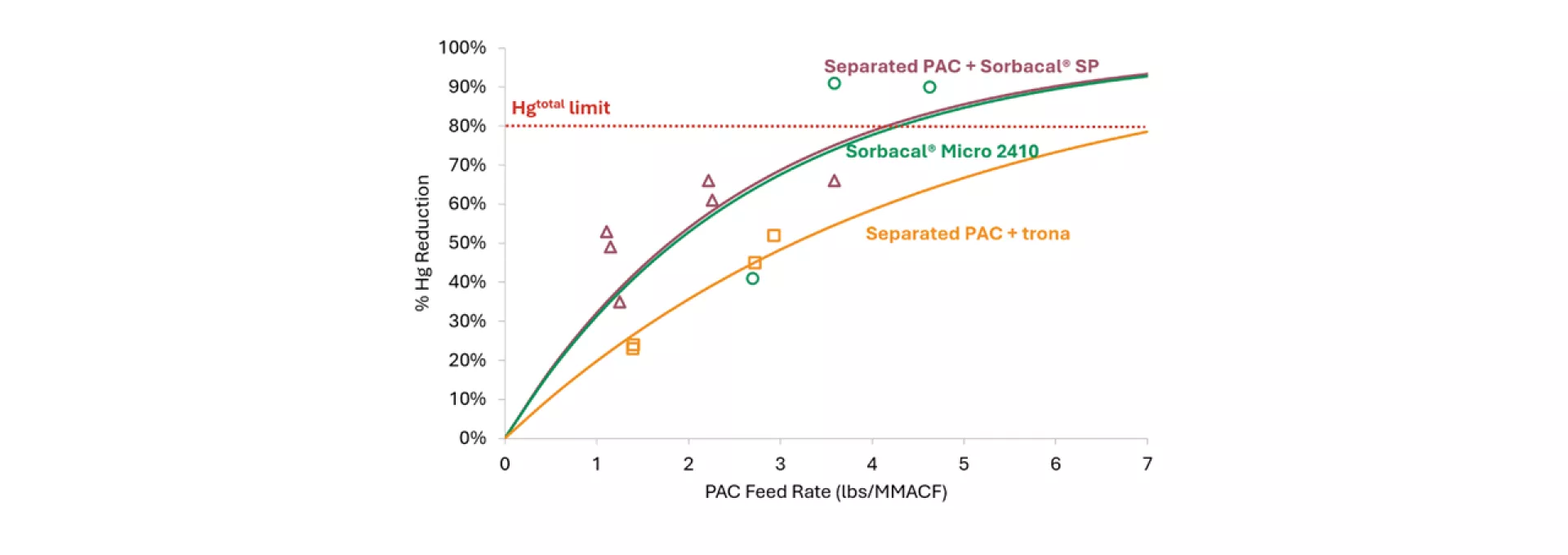
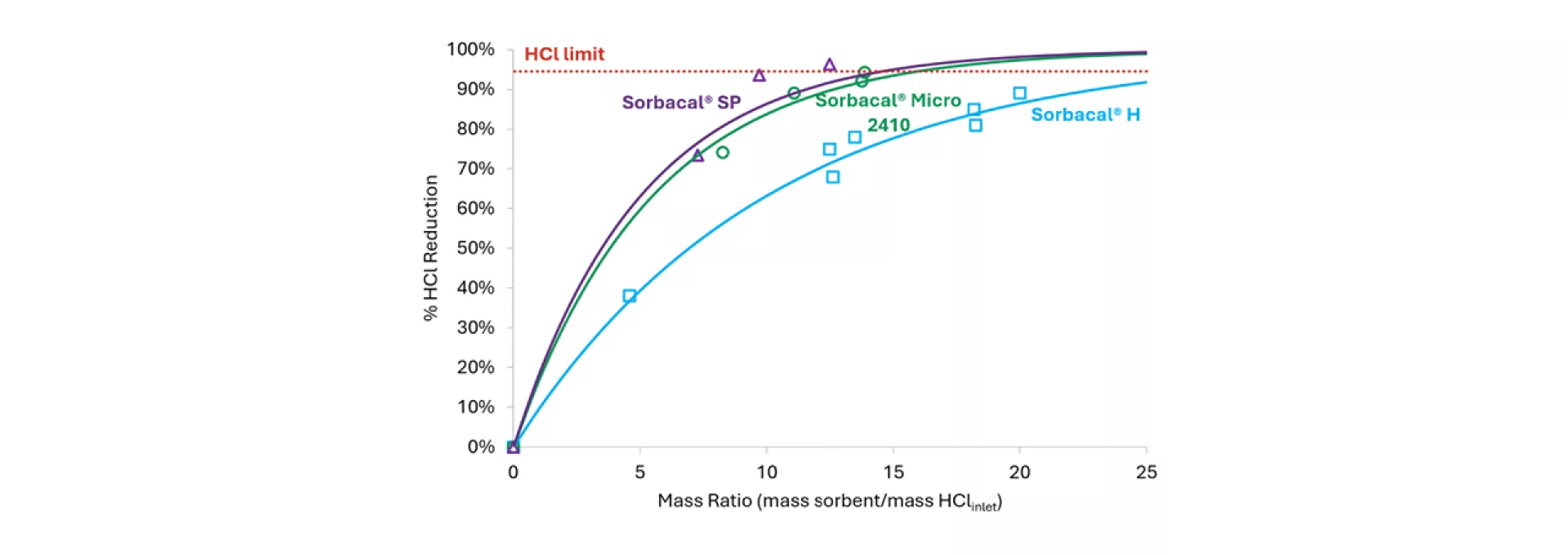
The trial confirmed that the Sorbacal® Micro blend offers an effective solution to simultaneously control HCl and mercury emissions, with a single sorbent.
It allowed the customer to use their existing single DSI system, reducing the cost and time to implement controls while meeting both emission limits. Over 95% of HCl and more than 80% of mercury were abated with the Sorbacal® Micro blend, at relatively low feed rates. These reductions resulted in compliance with regulations.